
Environmental Social Responsibility
Our environmental responsibility program is built around cleaner fleet choices, smarter routing, lower waste, and practical improvements across logistics operations.
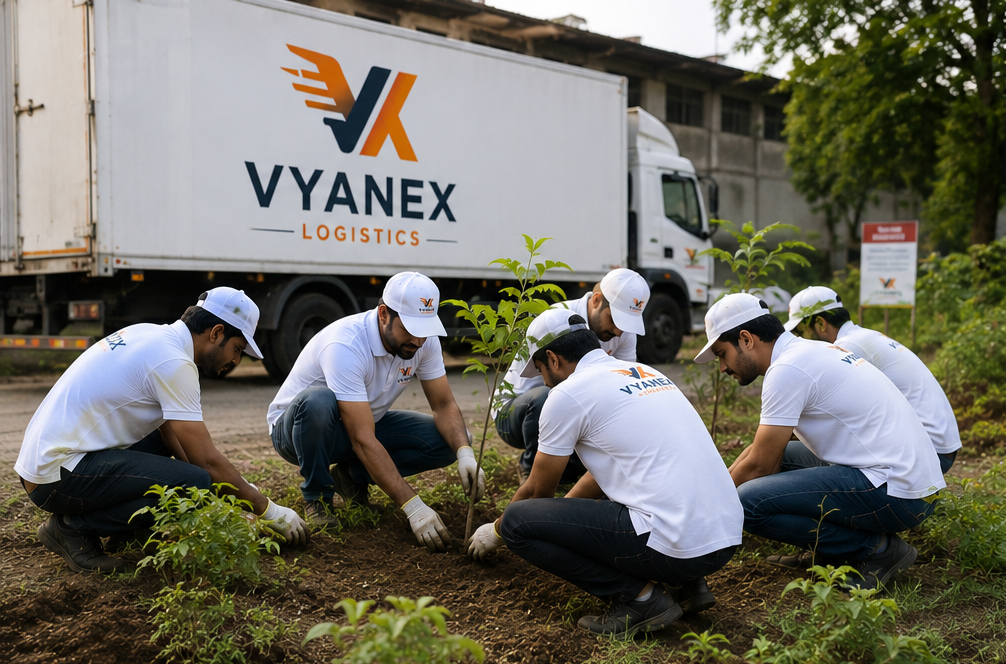
Reducing waste without slowing the supply chain
Logistics has a direct environmental footprint. Fuel, routing, idle time, packaging waste, and warehouse energy all affect how responsibly a shipment moves. Vyanex approaches ESR as an operations discipline, not a decorative claim.
Our focus is on steps that make business sense and environmental sense together: better route planning, higher vehicle utilization, documented maintenance, digital paperwork, and gradual adoption of lower-emission practices wherever the route profile supports it.
Smarter route planning
Reducing empty miles and avoidable detours through corridor planning and control tower visibility.
Fleet discipline
Preventive maintenance, driver awareness, and vehicle selection matched to payload and route.
Paper-light operations
Digital PODs, electronic records, and reduced duplicate documentation across shipment cycles.
Practical changes that suit logistics
The environmental plan avoids showy claims and concentrates on repeatable habits across fleet, warehouse, documentation, and route behavior.
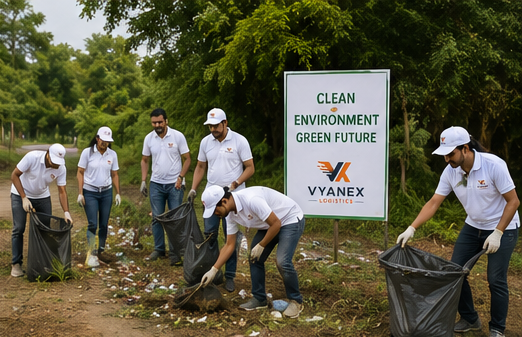 Cleaner everyday operations
Route efficiency
Planning dispatches to improve load factor, combine compatible movements, and reduce unnecessary backhaul gaps.
Vehicle fitness
Regular inspection, tire checks, emission compliance, and preventive maintenance before long-haul movement.
Digital documentation
Moving toward paper-light shipment records, invoices, proof of delivery, and internal approvals.
Efficient facilities
Improved lighting, cleaner material handling, better yard discipline, and waste segregation at hubs.
Green partnerships
Working with customers and vendors who value responsible packaging, route planning, and measurable improvement.
Driver awareness
Training on idle reduction, safe driving, correct loading, and fuel-conscious highway behavior.
How ESR moves from idea to operation
A steady, four-part loop keeps environmental improvements grounded in daily operations rather than a one-time initiative.
Grounded in daily operations
Study route behavior
Frequent lanes are reviewed for utilization, delay points, empty runs, and avoidable idling.
Adjust operating SOPs
Dispatch, maintenance, and documentation routines are updated where change is practical.
Monitor field adoption
Branch teams review whether the new routine is actually followed during daily operations.
Expand what works
Useful changes are extended to more lanes, hubs, and customer operating models.
Sustainability tracked through movement quality
 Measured through movement quality
Carbon intensity improvement target
Digital POD direction
Route visibility and control
Avoidable idle mindset